
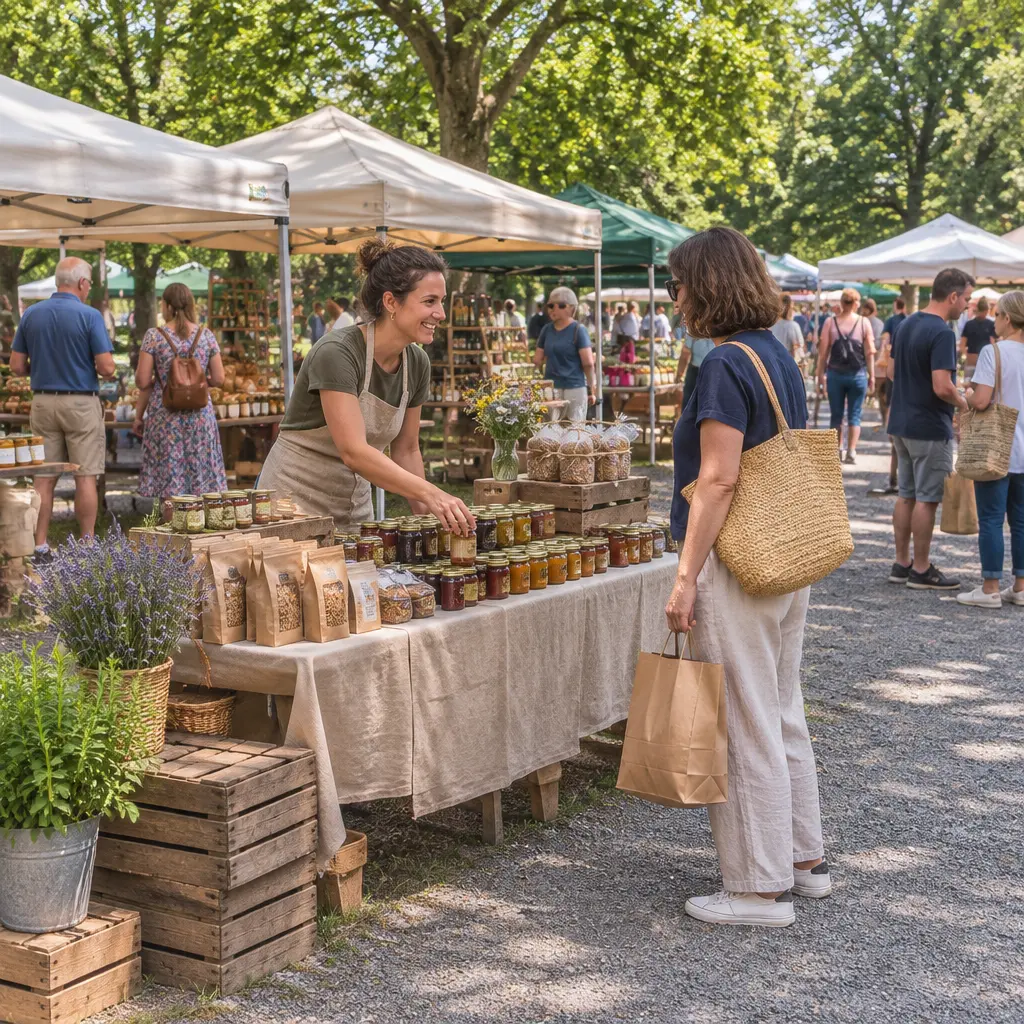
Artisan food markets are curated events where independent producers sell distinctive, often locally made foods directly to shoppers. For a vendor choosing where to attend, the best market is not necessarily the one with the biggest crowd: it is the one whose visitors are most likely to value and buy the vendor’s products. Matching events to customer demographics—such as household income, age, food preferences, and local identity—can improve sales per interaction, strengthen repeat business, and make event costs more worthwhile. U.S. Department of Agriculture data show that farmers markets and direct-to-consumer food sales are a substantial part of local food systems, while market-level visitor profiles and purchasing behavior vary widely. This article explains how to define a target customer, assess event audiences, compare demographic fit with foot traffic, and use practical measures to select markets.
Event Selection Uses Customer Demographics to Improve Market Fit
Customer-demographic event selection is the process of comparing an event’s audience with a vendor’s intended buyers before committing time, inventory, and fees. Demographics describe measurable population characteristics, including age, household composition, income, education, and location. For artisan food businesses, those characteristics are useful when interpreted alongside food-related behaviors and preferences: demographic fit is a guide to likely demand, not proof that an individual will purchase.
The distinction matters because foot traffic measures opportunity to be seen, not the share of visitors who want a particular product or can afford it. A high-attendance event may produce weak results for a premium small-batch cheese maker if its visitors are primarily seeking low-cost prepared meals. A smaller neighborhood market may yield more qualified conversations and purchases if shoppers already seek local, specialty foods. The USDA’s National Farmers Market Managers Survey has documented a varied landscape of markets, customers, and operating practices; its findings support evaluating individual event context rather than treating all markets as interchangeable.
Demographic fit and customer segmentation
Customer segmentation groups potential buyers by shared characteristics or needs. A vendor might define a core segment as local households with children seeking convenient, minimally processed snacks, or as higher-spending food enthusiasts interested in regional ingredients and craft production. The U.S. Census Bureau’s American Community Survey provides local estimates for characteristics such as age, income, household size, and education. Those estimates can help screen an event’s surrounding trade area, but they should be checked against actual event attendees because a market can draw visitors from well beyond its host neighborhood.
Useful demographic indicators depend on the product. Disposable income may matter for premium products; household size may influence package size; age and life stage may shape demand for dietary-specific foods or ready-to-eat options. Pair these indicators with behavioral evidence—such as shopper surveys, vendor interviews, and sales records—rather than assuming that age or income alone predicts taste.
Why qualified shoppers can outweigh crowd size
A qualified shopper is someone whose needs, preferences, and budget align with an offer. Event performance can therefore be assessed through conversion rate, average transaction value, gross margin, and repeat-purchase potential—not just attendance. For example, a vendor who sells to 12 percent of 500 relevant visitors may outperform one who sells to 2 percent of 2,000 general visitors, particularly if the smaller event has lower fees and less spoilage.
This approach also reflects broader food-market conditions. USDA Economic Research Service reporting on local food marketing shows that farms use multiple direct-to-consumer channels, including farmers markets, farm stands, and community-supported agriculture. Because channels and customer bases differ, vendors benefit from testing where their specific product performs rather than relying on a market’s overall reputation or attendance claims.
Demographic Event Selection Measures Audience, Affordability, and Occasion
A practical demographic assessment combines who attends, what they are seeking, and the circumstances of the event. The same people may shop differently at a weekly neighborhood market, a holiday craft fair, and a food festival. Event type, schedule, location, and competing activities affect whether visitors arrive ready to buy groceries, sample treats, or browse without making purchases.
Income, price tolerance, and product positioning
Income is relevant when a product carries a premium price, but it should not be used as a crude proxy for willingness to pay. A better assessment looks at comparable products sold nearby, the event’s price range, and shopper responses to samples or package sizes. The Bureau of Labor Statistics’ Consumer Expenditure Surveys track household spending patterns across categories and demographic groups; these national data can provide context, while local event research is needed to estimate demand for a particular artisan product.
Vendors can test affordability with tiered offers: a low-cost sampler, a standard package, and a gift or premium bundle. Tracking the sales mix reveals whether shoppers are interested but constrained by price, or whether the product proposition itself needs adjustment. This is more informative than labeling an audience “high income” and presuming that sales will follow.
Age, household composition, and food needs
Age and household composition can help vendors anticipate use occasions. Families may value portable portions and familiar flavors; single-person households may prefer smaller packages; older shoppers may prioritize ingredient clarity or convenience. These are hypotheses to validate, not universal rules. The Census Bureau’s household and age tables can help identify the surrounding population, while brief event surveys can reveal actual preferences, dietary needs, and purchase frequency.
Food-allergen labeling, ingredient transparency, and clear storage guidance are especially important when serving diverse audiences. The U.S. Food and Drug Administration identifies nine major food allergens for labeling purposes in the United States. Vendors should follow applicable labeling rules and make product information easy to understand, regardless of the audience profile.
Local identity, food culture, and mission alignment
Markets can attract shoppers because they value regional identity, small businesses, sustainable production, or culturally familiar foods. Such motivations may cross income and age categories, making values and food culture important complements to demographic data. USDA’s National Farmers Market Managers Survey and local market reports can help identify whether an event emphasizes local sourcing, community access, specialty foods, or family activities.
A vendor should also assess mission fit. An event serving a community with limited access to fresh food may be a strong match for affordable staples or produce, even if its average transaction is lower than at a luxury food festival. Conversely, a specialty event may suit products whose production story, provenance, or craft method is central to their value.
Market Research Validates Demographic Fit Before Booking
Demographic fit is strongest when it combines secondary data with direct observation. Public statistics describe the surrounding population; event organizers and vendors can provide attendance patterns; and small-scale tests show whether the audience actually responds to a product. Together, these sources reduce the risk of choosing an event based on optimistic attendance estimates alone.
Use public data to screen event locations
Start with the Census Bureau’s American Community Survey for the event’s likely catchment area, using relevant measures such as income, age, household size, and commuting or residential patterns. Treat the radius as a starting assumption: transit access, parking, event programming, and nearby attractions can substantially change who attends. USDA local-food resources can add context on direct-market activity and the role of farmers markets in regional food systems.
Public data should narrow the list, not make the final decision. A market in an affluent area may draw visitors with different food priorities than residents, and a destination event can attract a much broader audience. Ask organizers for anonymized attendee profiles, survey results, vendor category mix, and information about how those figures were collected.
Interview organizers, vendors, and shoppers
Short, structured questions can reveal details that attendance totals hide. Ask organizers about repeat-visitor rates, peak hours, customer origins, promotion channels, and the number of vendors selling close substitutes. Ask current vendors about sales ranges, product categories that perform well, weather effects, and the balance between sampling and purchases. When possible, speak directly with shoppers about what they came to buy, acceptable price points, and how often they attend.
Use consistent questions across events so comparisons are meaningful. Avoid relying on a single anecdote or an organizer’s total attendance figure without knowing whether it counts unique visitors, entries, or estimates. A simple one-page scorecard can record audience fit, sales potential, fees, travel, competition, and operating requirements.
Run a pilot and measure commercial outcomes
A pilot event is a limited test of product-market fit. Track qualified conversations, samples given, units sold, average order value, gross margin, unsold inventory, and customer sign-ups. Calculate event contribution after direct costs—booth fee, labor, transport, packaging, payment processing, and product loss—rather than judging success by gross revenue alone.
Repeat the test when seasonality or weather could distort results. A single rainy day may not represent normal demand, just as a holiday market may not predict performance at a weekly market. Comparing multiple dates and product formats gives a more reliable basis for deciding whether to return.
Event Selection Balances Demographic Fit with Foot Traffic and Costs
Foot traffic remains useful: more visitors can create more exposure and sales opportunities. The mistake is using it as the sole selection criterion. A sound decision weighs audience relevance, conversion potential, event costs, operational demands, and strategic value such as wholesale leads or repeat customers.
Compare events with a weighted scorecard
A weighted scorecard converts qualitative judgments into a consistent comparison. Vendors can rate each event from one to five on target-customer fit, observed purchase intent, price compatibility, organizer data quality, competition, fees, travel, and brand exposure. Assign greater weight to factors that matter most—for example, demographic fit and contribution margin for a premium perishables business, or customer-list growth for a packaged product seeking repeat online sales.
The score should support judgment, not replace it. Record confidence in each estimate, since an event with incomplete data should not receive the same certainty as one backed by several seasons of vendor results. Revisit the weights after each market season as actual outcomes accumulate.
Account for product category and event occasion
Different artisan foods require different audiences and buying conditions. Fresh bread and produce may benefit from routine grocery trips and convenient pickup; confectionery and specialty preserves may perform well in gift-oriented settings; hot prepared food may depend more on dwell time and meal occasions. These are category-specific hypotheses that should be checked against event rules, competing vendors, and sales data.
For perishable goods, demographic fit must be evaluated alongside forecast accuracy and cold-chain capacity. A promising audience is not commercially attractive if the event’s hours, transport distance, or storage conditions create excessive waste or food-safety risk. Review local permitting and food-handling requirements before committing.
Consider equity, access, and long-term customer value
Demographic targeting should help a business serve people well, not exclude audiences based on stereotypes. Clear pricing, accessible product information, culturally responsive flavors, and appropriate payment options can broaden participation. USDA programs such as the Supplemental Nutrition Assistance Program’s farmers market resources illustrate how market infrastructure can connect eligible shoppers with direct-market food, subject to program and market participation requirements.
Some events deliver value beyond same-day sales. They may introduce a product to local retailers, generate catering inquiries, or build a customer list for recurring orders. Include these outcomes in evaluation, while keeping consent and privacy practices appropriate when collecting customer information.
Conclusion: Customer Demographics Make Event Choices More Strategic
Artisan food markets should be selected for customer fit, not crowd size alone. Demographic segmentation helps vendors identify promising audiences; local and event-specific research tests whether those audiences’ preferences and budgets align with a product; and pilot sales, contribution margins, and repeat-customer measures reveal whether the match is commercially sustainable. Foot traffic remains a useful indicator, but it becomes meaningful only when considered alongside purchase intent, event occasion, costs, and operational demands.
The practical next step is to define a target customer, screen candidate locations with public data, interview organizers and vendors, and test the strongest options using a consistent scorecard. Reassess after each season, update assumptions with sales evidence, and choose events that create durable customer relationships as well as immediate revenue.
Sources: U.S. Department of Agriculture, National Farmers Market Managers Survey, https://www.ams.usda.gov/services/local-regional/farmers-markets-and-local-food-marketing/national-farmers-market-managers-survey; U.S. Department of Agriculture, Economic Research Service, Local Food Marketing Practices Survey, https://www.ers.usda.gov/data-products/local-food-marketing-practices-survey; U.S. Census Bureau, American Community Survey, https://www.census.gov/programs-surveys/acs; U.S. Bureau of Labor Statistics, Consumer Expenditure Surveys, https://www.bls.gov/cex/; U.S. Food and Drug Administration, Food Allergies, https://www.fda.gov/food/food-labeling-nutrition/food-allergies; U.S. Department of Agriculture, Food and Nutrition Service, SNAP and Farmers Markets, https://www.fns.usda.gov/snap/farmers-markets