
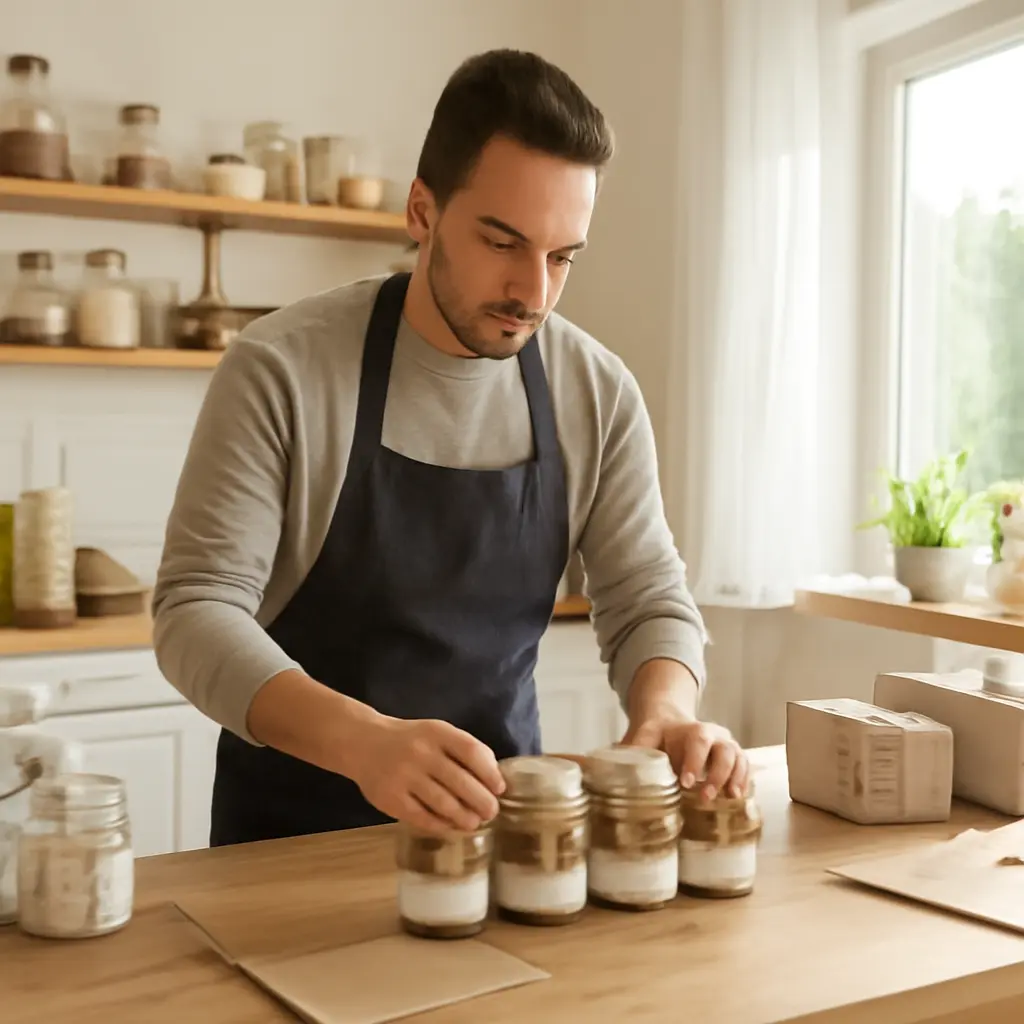
A gift jar is not simply a snack in a container: it is a curated, ready-to-give product whose price should account for ingredients, packaging, labor, selling costs, and the experience it offers. Pricing gift jars like everyday snacks can leave money on the table because customers are buying presentation and convenience as well as food. The U.S. Small Business Administration recommends accounting for costs, market conditions, and customer value when setting prices; applying that approach can help jar makers protect margins, communicate value, and build gift tiers without pricing themselves out of the market.
Gift jar pricing reflects product value, not just snack cost
Gift jar pricing is the method of setting a selling price for a packaged food gift by considering both the cost of producing it and the value customers perceive in its presentation, convenience, and suitability for gifting. There is no single authoritative definition of “gift jar pricing,” but the underlying principles are familiar: the SBA describes pricing as a business decision informed by costs, customers, competition, and market conditions. For a gift jar, that means calculating the full cost of the product, then checking whether the price matches the offer customers see.
The distinction matters because a snack is usually bought for immediate consumption, while a gift jar may also solve a gifting problem. It can save the buyer time, arrive ready to present, include a personalized tag, and feel more special than the same ingredients sold in bulk. Those benefits do not justify an arbitrary markup; they do justify measuring the full product and testing what customers will pay.
The context is commercially meaningful. The National Retail Federation’s 2024 Mother’s Day survey estimated U.S. consumer spending at a record $33.5 billion, with gifts among the main spending categories. That broad seasonal figure is not a forecast for any one jar business, but it illustrates the scale of occasions in which presentation and gifting convenience influence purchases. A jar priced only against a grocery-store snack may miss the value of being a complete, occasion-ready gift.
Full-cost pricing protects gift jar margins
Full-cost pricing starts with the complete cost of delivering one sellable jar, not just its food ingredients. The SBA’s business guidance distinguishes expenses such as startup costs and ongoing operating costs; in practical pricing, makers should allocate relevant recurring costs to products and include a reasonable amount for their own labor. The calculation should include ingredients, container, lid, label, gift packaging, assembly time, payment processing, and any seller-paid shipping or marketplace fees.
Ingredient and packaging cost per jar
Ingredient cost per jar is the cost of the actual recipe quantity used, including expected production loss. Packaging cost includes the jar, lid, seal, label, ribbon, box or bag, protective packing materials, and any insert or gift tag. A low-cost recipe can still be expensive to present well: if the packaging costs several dollars and takes time to assemble, treating it as a negligible add-on understates the product’s cost.
For example, suppose a maker spends $4.20 on ingredients, $2.30 on a glass jar and lid, $1.15 on a gift box and finishing materials, and $2.00 on direct labor. The direct production cost is $9.65 before payment fees, overhead, and delivery costs. This is an illustrative calculation, not an industry benchmark; each business should use supplier invoices and timed production records rather than generic estimates.
Labor, overhead, and selling fees
Labor includes the time needed to prepare, fill, seal, label, customize, and pack each jar. Overhead may include kitchen rent, utilities, insurance, equipment, and software. A seller should avoid counting every general business expense twice, but should ensure that prices collectively contribute enough to cover overhead and leave profit. Payment processing, online marketplace commissions, and shipping subsidies should also be included when they apply.
The U.S. Bureau of Labor Statistics reported that food preparation and serving occupations had a median hourly wage of $15.45 in May 2023. This is a broad occupational benchmark, not a required wage or a measure of self-employed craft labor. It nevertheless underscores why unpaid owner time can distort pricing: a product may appear profitable only because the maker’s work has been left out of the calculation.
Markup and gross margin are not the same
Markup is the amount added to cost, expressed as a percentage of cost; gross margin is the share of the selling price remaining after the cost of goods sold. Confusing the two can produce prices that look profitable but deliver less margin than expected. If a jar costs $10 to make and sells for $15, the markup is 50%, while the gross margin is 33.3% before other operating expenses.
A simple target-margin formula is: selling price = product cost ÷ (1 − target gross margin). At a $10 cost and a 40% target gross margin, the calculation is $10 ÷ 0.60, or $16.67. This is a planning tool, not a guarantee of profit: the target must still be checked against market expectations, sales fees, and the business’s actual expenses.
Perceived value distinguishes a gift jar from a snack
Perceived value is the customer’s judgment of the benefits received compared with the money and effort required to buy the product. In a gift jar, those benefits can include attractive presentation, a clear theme, personalization, dependable quality, and the convenience of having a present ready to give. The concept connects cost-based pricing to value-based pricing: costs establish a floor, while customer response helps determine whether the final price is credible.
Presentation and gifting convenience
Presentation is the visible design and finishing that make a jar feel intentional as a gift. A coordinated label, tamper-evident seal, gift-ready box, and message card can distinguish it from an ordinary pantry item. Convenience also has practical value: customers may pay for a product that needs no extra wrapping or assembly, especially when ordering for a holiday, host, teacher, or colleague.
That value must be visible before purchase. Product photographs should show the actual packaging and scale, while descriptions should state what is included, whether a gift note is available, and how the item is packed for delivery. Clear presentation supports the price more effectively than simply calling a jar “premium.”
Personalization, theme, and occasion
Personalization means adapting a jar or its presentation to the buyer’s recipient or occasion, such as adding a name, message, color scheme, or themed label. These options can increase perceived relevance, but they may also add labor, materials, and error risk. Price them as distinct upgrades when they require extra work rather than absorbing them into the standard product price.
Occasion-based products can also support a clear range of offers: a simple thank-you jar, a more elaborate holiday gift, and a customized celebration option. The tiers should differ in meaningful ways, such as contents, size, packaging, or personalization—not merely in price. Track sales by occasion to learn which variations customers actually choose.
Market testing helps set a credible gift jar price
Market-based pricing compares a product’s offer with alternatives customers can realistically buy. For gift jars, those alternatives may include local gourmet foods, ready-made gift boxes, handmade marketplace listings, and conventional snacks. A competitor’s price is useful context, but it is not a pricing formula: products can differ in size, ingredients, packaging, shipping, and service.
Compare like with like
A useful comparison records jar size, product type, packaging, customization, shipping terms, and whether the listing is genuinely gift-ready. Compare the total customer cost, not just the displayed item price. A lower-priced jar may exclude a box or charge shipping separately, while a higher-priced one may include personalization and presentation.
The SBA recommends researching target customers and competitors as part of business planning. For a jar maker, that can mean reviewing local shops and online listings, asking customers what they consider a suitable gift price, and testing a small number of price points. Avoid treating informal feedback as proof of purchase intent; actual orders, conversion rates, and repeat purchases provide stronger evidence.
Use tiers and bundles without hiding costs
A price ladder offers customers a choice among clearly differentiated options. For instance, a basic jar can be the entry-level gift, a boxed version can add presentation, and a personalized bundle can include a card or complementary item. Bundles may increase order value, but their prices should account for every included product, extra assembly time, and packaging.
Seasonal testing is particularly useful because gifting demand and customer expectations can change around holidays and events. Record units sold, average order value, gross margin, and unsold inventory for each option. If a premium tier sells less often but contributes substantially more gross profit per order, it may still be valuable; if it sells rarely and takes much longer to make, revise or discontinue it.
A practical gift jar pricing example
Consider an illustrative jar with $4.20 in ingredients, $2.30 in container and lid, $1.15 in gift packaging, and $2.00 in direct labor, for a direct cost of $9.65. If the maker also estimates $1.00 per unit for selling fees and allocated overhead, the planning cost becomes $10.65. At a 40% target gross margin on that planning cost, the suggested price would be $10.65 ÷ 0.60, or $17.75. The maker could test a rounded price such as $17.99, then monitor sales and realized margin.
This example is not a market quote or universal recommendation. If comparable gift-ready products sell for less, the maker can examine whether sourcing, packaging, labor time, or product design can be improved. If customers accept a higher price, the business should still verify that the increase is supported by a clear benefit and does not rely on cutting product quality or underpaying labor. A chart showing cost per jar, selling price, and gross margin across three product tiers can make these trade-offs easier to see.
Conclusion: price gift jars for the complete experience
Gift jar pricing works best when full-cost pricing establishes a sustainable floor, perceived value explains the gift-ready offer, and market testing checks whether customers accept the price. Count ingredients, containers, finishing materials, labor, fees, and allocated overhead; distinguish markup from gross margin; and compare products on a like-for-like basis. Then use clear tiers and sales data to refine the offer.
Pricing a gift jar like an everyday snack can erase the value of presentation and convenience—or leave the maker’s labor unpaid. Review your cost sheet, compare a few genuine alternatives, and test a carefully defined price or tier before the next seasonal rush. Revisit the numbers whenever supplier costs, packaging, or sales channels change.
Sources: U.S. Small Business Administration, “Calculate your startup costs,” https://www.sba.gov/business-guide/plan-your-business/calculate-your-startup-costs; U.S. Small Business Administration, “Market research and competitive analysis,” https://www.sba.gov/business-guide/plan-your-business/market-research-competitive-analysis; U.S. Bureau of Labor Statistics, “Occupational Employment and Wages, May 2023: Food Preparation and Serving Related Occupations,” https://www.bls.gov/oes/2023/may/oes350000.htm; National Retail Federation, “Mother’s Day Spending to Reach Record $33.5 Billion,” 2024, https://nrf.com/media-center/press-releases/mothers-day-spending-reach-record-335-billion