
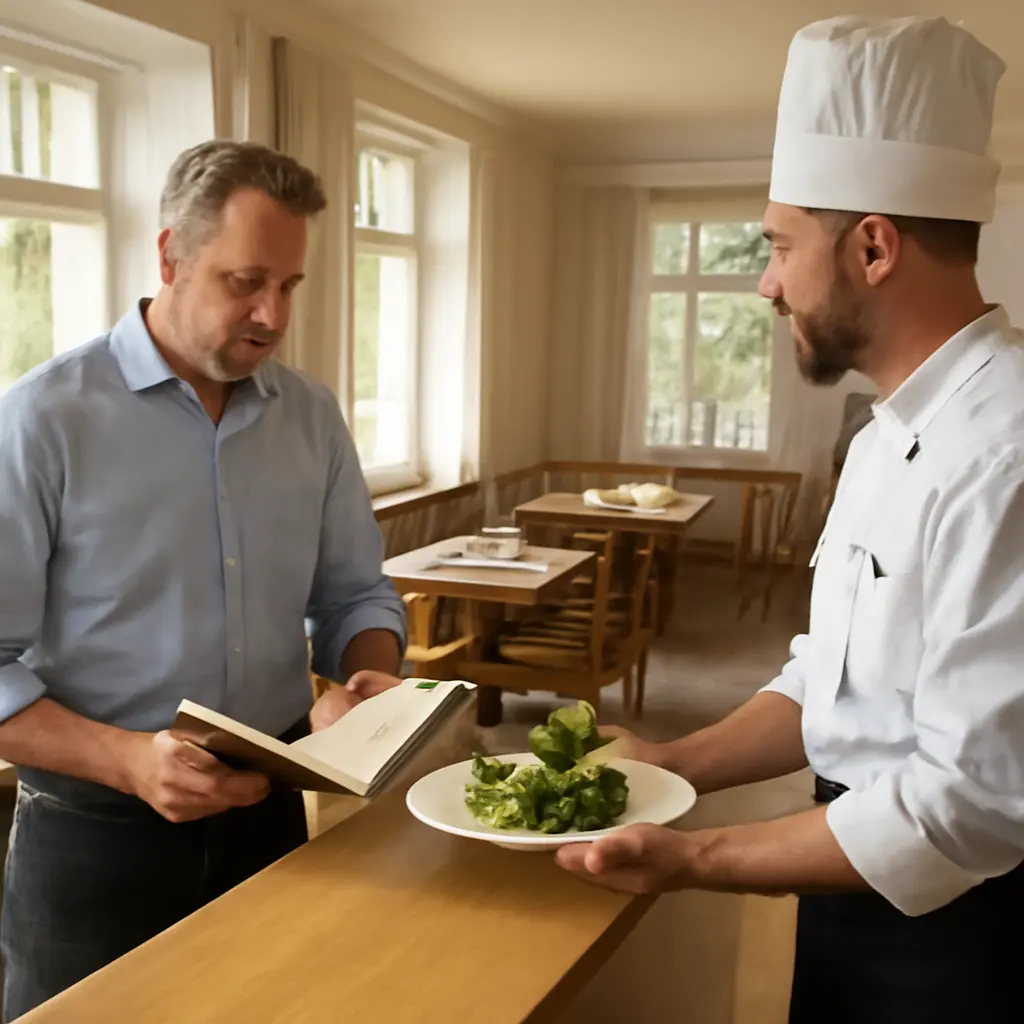
A cooking sign error is the mismatch between the food a restaurant actually delivers and the signals people use to discover, judge, and remember it. Those signals include menu wording, food photography, reviews, social posts, and the restaurant’s own description of its strengths. Good cooking can therefore go unnoticed when its public-facing cues are inaccurate, incomplete, or simply hard to find. The issue matters in a crowded industry: the National Restaurant Association reported that U.S. restaurant and foodservice sales were projected to reach $1.1 trillion in 2024, while online discovery and reviews increasingly shape where diners choose to spend. Understanding the mismatch, improving the menu and visual evidence, and monitoring the results can help a restaurant make its real quality legible without exaggerating it.
The Cooking Sign Mistake: When Quality and Signals Diverge
In communication and marketing, a “signal” is a cue that helps an audience infer something they cannot immediately verify. Applied to restaurants, the cooking sign mistake is the failure to communicate the distinctive quality of the food in ways that prospective diners can notice and trust. It is not a formal culinary or academic diagnosis; it is a useful description of a practical gap between kitchen performance and public perception.
The gap can arise even when food is excellent. A menu may hide the signature dish in generic wording, photographs may show unrepresentative plates, and review responses may leave a memorable complaint unanswered. Conversely, confident promotion cannot compensate for inconsistent execution. The goal is not louder advertising but a closer match between what the kitchen makes and what the restaurant signals.
The quality-to-discovery gap
The quality-to-discovery gap is the distance between a restaurant’s actual food quality and the likelihood that a suitable diner will find and understand it. A neighborhood restaurant known locally for excellent handmade noodles, for example, may be difficult to discover if its menu and business profile describe it only as “Asian cuisine.” Specific, accurate descriptions give diners more useful evidence and make the restaurant easier to distinguish.
Discovery is also shaped by reputation. BrightLocal’s 2024 Local Consumer Review Survey found that 81% of U.S. consumers had used Google to read local business reviews. That figure is not restaurant-specific, but it illustrates why online reputation is part of the signal system: prospective guests may encounter a rating or review before they encounter the food itself.
The difference between a signal and a guarantee
A signal is evidence that influences expectations; it is not proof of the dining experience. A precise menu description, a current photograph, or a detailed review can reduce uncertainty, but the kitchen must still deliver. This distinction matters because overstated claims may attract attention briefly while creating disappointment, poor reviews, and lower trust over time.
The practical standard is consistency: a restaurant should describe what it serves, show food that resembles what arrives at the table, and maintain the quality those cues imply. Once that foundation is clear, the next task is identifying which particular signals are failing.
Menu Signals Make Distinctive Cooking Easier to Recognize
Menu signaling is the use of names, descriptions, layout, and price to help diners understand a dish and decide whether it suits them. Cornell University researchers Sheryl E. Kimes and Jochen Wirtz have examined menu design and pricing as management tools that influence customer choices and restaurant performance. A menu is therefore more than an inventory: it is often the first explanation of what a kitchen does especially well.
Specific dish descriptions
A useful description identifies meaningful ingredients, preparation, or origin without burying the dish in adjectives. “Slow-braised lamb with preserved lemon and cumin” communicates more than “chef’s special lamb.” The first gives diners concrete expectations and lets the restaurant express its cooking method and flavor profile; the second asks diners to trust a vague claim.
Specificity should be accurate and useful. Mention allergens or dietary characteristics clearly where relevant, and do not imply that an item is vegetarian, locally sourced, or house-made unless that is true. The menu’s job is to clarify the experience, not to promise more than the kitchen can consistently deliver.
Menu placement and decision friction
Menu placement is the way visual order, grouping, and emphasis guide attention. A signature dish can disappear when it is lost among many similar items, labeled with unfamiliar terminology, or placed in a section whose name does not fit how customers search. Clear categories, readable type, and a short explanation of a house specialty can reduce the effort required to make a choice.
Avoid treating popular menu-design claims as universal laws. For example, the idea that a particular page position always captures a diner’s eye is not a substitute for testing with the restaurant’s actual menu and customers. Track which dishes are ordered, ask diners how they found them, and compare results after making one change at a time.
Price as an expectation cue
Price communicates an expectation of portion, ingredients, service, and occasion as well as cost. A low price can make a carefully sourced dish seem less distinctive; a premium price can heighten scrutiny of execution and presentation. Neither effect means a restaurant should set prices to manufacture an image. Prices should reflect costs and positioning, while descriptions and service make the value understandable.
When menu language, placement, and price tell a coherent story, diners have a clearer reason to try the food. That story still needs credible visual and review evidence, particularly before a first visit.
Photos and Reviews Validate the Food Signal
Visual and social proof are the cues diners use to assess a restaurant before they can taste its food. Photographs show portion, color, and presentation; reviews offer accounts of flavor, service, and consistency. These sources are not perfect measures of culinary quality, but they can either reinforce the restaurant’s promise or create doubt about it.
Representative food photography
Representative photography accurately shows dishes as customers can expect to receive them. A glossy image of a heavily styled plate may draw attention, but if the actual serving differs substantially in portion or presentation, the image becomes a source of distrust. Restaurants should favor current, well-lit photographs of real menu items and update them when recipes or plating change.
Images can also make a specialty more legible. A close-up of a flaky pastry interior or a clearly photographed house-made sauce may communicate craft more effectively than a generic dining-room image. Use captions or menu names so viewers can connect the image to an orderable dish.
Reviews as public evidence
Reviews are customer accounts that help future diners form expectations, but they represent individual experiences rather than controlled quality assessments. A useful review pattern is more informative than a single extreme comment: repeated praise for crispness, seasoning, or attentive service points to strengths, while recurring complaints about temperature or wait times may signal a fixable problem.
Responding professionally can show that a restaurant listens. Thank guests for specific feedback, avoid disclosing private information, and explain corrective steps only when they are genuine. Do not pressure customers to remove criticism or use incentives that could undermine review authenticity. Reviews can inform improvement, but the kitchen and service team must address the underlying experience.
Platform consistency and discoverability
Platform consistency means keeping names, menus, hours, location details, and photographs aligned across the restaurant’s website and third-party listings. Conflicting menus or outdated opening hours introduce avoidable uncertainty. Search visibility can help a diner find a restaurant, but discoverability is only useful if the information they find is current and accurately describes the food.
A practical audit begins with the places customers actually use: the restaurant website, map listings, reservation platforms, and delivery services. Check the signature dish’s name and description, confirm that photos match the current menu, and remove unavailable items. Consistent information connects digital discovery to the real meal.
A Restaurant Can Diagnose and Correct the Sign Mistake
Diagnosis compares the restaurant’s intended identity with the evidence customers encounter and the experience they report. The process should connect marketing observations to operational facts: what sells, what guests remember, what the kitchen executes reliably, and where expectations break down.
Map the signature dish from kitchen to customer
Start by naming one or two dishes that best represent the restaurant’s cooking. Confirm that the recipe, plating, portion, and availability are consistent across service periods. Then inspect how each dish is presented on the menu, website, listings, and social channels. If customers praise a dish the restaurant barely features, the problem may be visibility rather than food quality.
Use a simple signal audit
A signal audit records what the restaurant claims, what evidence supports the claim, and what customers appear to understand. The following table is a practical framework; it is not a published industry benchmark.
| Signal | Check | Useful indicator |
|---|---|---|
| Menu | Is the specialty easy to identify and accurately described? | Orders of the featured dish; guest questions about ingredients |
| Photography | Do images show current, representative portions and presentation? | Engagement with dish-specific images; expectation-related feedback |
| Reviews | Do recurring comments match the restaurant’s intended strengths? | Patterns in praise and complaints over time |
| Operations | Can the kitchen deliver the advertised dish consistently? | Remakes, returns, availability, and service consistency |
Pair these indicators rather than relying on one number. More clicks do not necessarily mean more satisfied diners, and higher dish sales do not prove that a description is accurate. Comparing customer response with kitchen execution helps separate a communication problem from a product or service problem.
Test changes and protect trust
Test changes in small, measurable steps. Rewrite a vague dish description, update one image, or feature a specialty more clearly, then compare relevant results over a defined period while accounting for seasonality and promotions. Ask front-of-house staff what diners misunderstand and invite direct feedback in a neutral way.
Do not disguise operational shortcomings with promotional language. If recurring reviews identify slow service or inconsistent doneness, address those issues before amplifying the restaurant’s promise. The strongest signal is a claim that the kitchen and service team can repeatedly substantiate.
Conclusion: Make the Cooking Easier to See
The sign mistake that keeps good cooking unnoticed is a mismatch between the food’s real strengths and the cues diners encounter before ordering. Clear menu language, sensible menu structure, representative photographs, credible reviews, and consistent online information can narrow that gap. Research on local reviews shows how commonly consumers consult public feedback, while restaurant-industry sales figures underscore the scale and competition of the market.
The remedy is not to overstate quality; it is to make genuine quality easier to recognize and then deliver it consistently. Choose a signature dish, audit how it appears across customer touchpoints, and track both guest response and kitchen performance. For further reading, consult the National Restaurant Association’s industry research, BrightLocal’s local consumer review findings, and Cornell University’s work on menu design and restaurant management.
Sources: National Restaurant Association, 2024 State of the Restaurant Industry Report, https://restaurant.org/research-and-media/research/research-reports/state-of-the-restaurant-industry/; BrightLocal, Local Consumer Review Survey 2024, https://www.brightlocal.com/research/local-consumer-review-survey/; Cornell University School of Hotel Administration, Restaurant Menu Design: A Review of Literature and the Impact of Menu Psychology, https://ecommons.cornell.edu/; Cornell University School of Hotel Administration, Jochen Wirtz and Sheryl E. Kimes, The Moderating Effects of Familiarity and Its Impact on the Effectiveness of Revenue Management, https://ecommons.cornell.edu/