
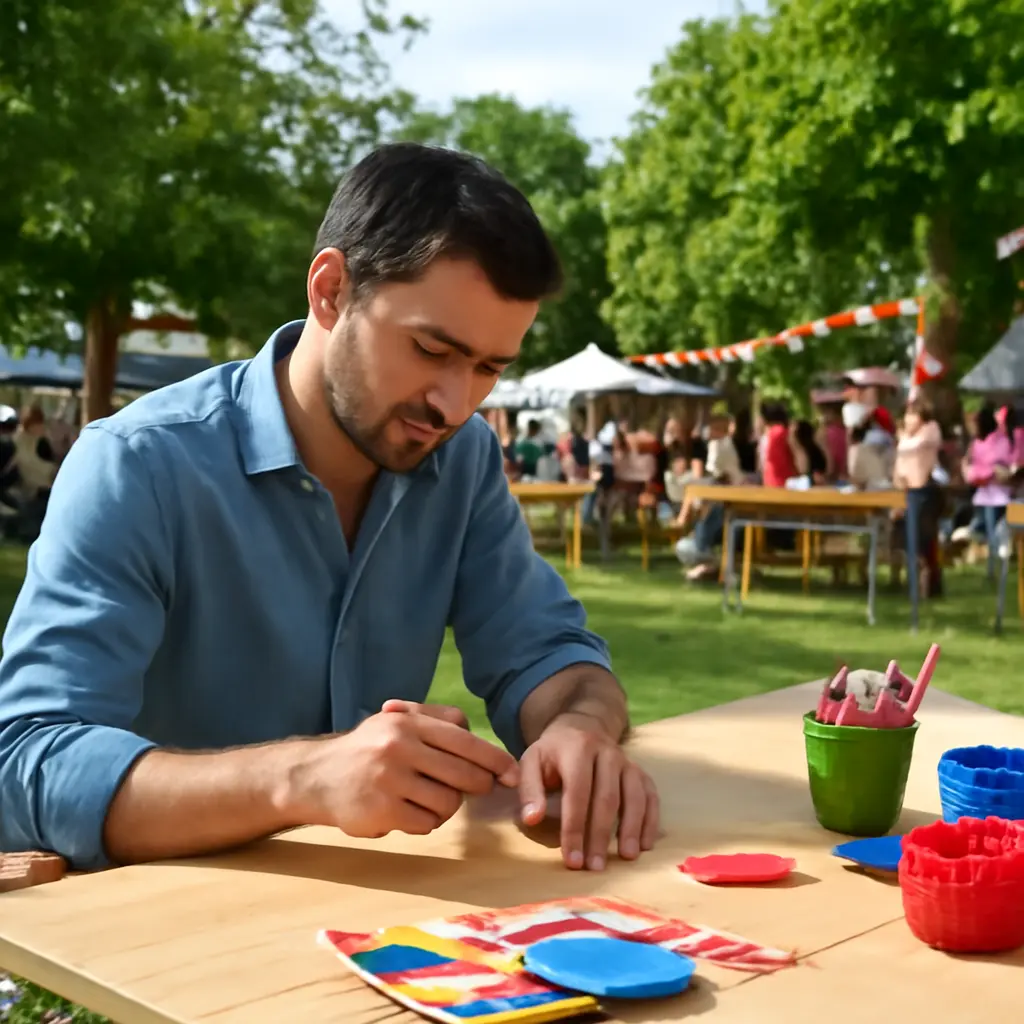
Maker festival attendees are visitors who travel to events celebrating hands-on creativity, technology, craft, and do-it-yourself culture. Destination marketers have found that these gatherings can attract more than curious spectators: attendees may be motivated travelers who value participatory experiences, local makers, and opportunities to learn. The evidence is event-specific rather than a single universal attendee profile, but research on major maker events and broader travel trends points to practical lessons about audience reach, spending, community connections, and how destinations can measure festival impact.
Maker festival attendees reveal a participatory destination audience
A maker festival is an organized gathering where people demonstrate, teach, sell, or try activities such as robotics, electronics, crafts, fabrication, and design. Maker Media’s description of Maker Faire presents it as a family-friendly showcase of invention and creativity, bringing together makers and people interested in what they create. For destination marketers, the important attribute is participation: attendees are not necessarily passive audiences, and the festival experience can connect them with local businesses, venues, and communities.
There is no consistently published, cross-event dataset establishing the typical maker-festival visitor’s age, origin, length of stay, or spending. Marketers therefore need to distinguish confirmed event figures from broader tourism indicators. For context, the U.S. National Travel and Tourism Office reported 72.4 million international visitors to the United States in 2024, while the U.S. Travel Association estimated that domestic and international travelers spent $1.3 trillion in the country that year. These figures establish the scale of the wider travel economy, not the economic impact of any particular maker festival.
Attendees include makers, learners, families, and curious spectators
Maker-festival audiences are best understood as overlapping groups rather than one demographic. Some visitors arrive to exhibit or sell work; others attend to learn a skill, explore technology, bring children to interactive activities, or enjoy a day out. The Maker Faire model explicitly combines exhibits, demonstrations, and hands-on experiences, making it relevant to families as well as people already involved in maker communities. This variety matters for destination messaging: a festival can be promoted as an educational outing, a creative event, or a reason to explore the host city.
Audience segmentation should be verified locally. Registration surveys, ticket data, workshop sign-ups, and post-event questionnaires can show whether visitors are residents, regional day-trippers, or overnight guests. Without those measures, claims about attendee demographics or travel behavior risk being assumptions rather than findings.
The format favors hands-on and experience-led travel
A participatory event gives visitors reasons to spend time on site: they may watch a demonstration, join a workshop, speak with exhibitors, or return for another activity. This makes maker festivals a natural fit with experience-led destination marketing, which emphasizes what a visitor can do and learn rather than only what they can see. The U.S. Bureau of Economic Analysis defines arts and cultural production broadly enough to include creative industries and related activities, while the National Endowment for the Arts has documented the role of arts participation in community life. Those broader findings help explain the cultural context, but they do not, by themselves, quantify maker-festival tourism.
Maker festival attendees connect event appeal with place identity
A festival can serve as a destination-branding platform when its program reflects the character, skills, and creative networks of its host community. Destination marketers can use maker events to introduce visitors to local studios, museums, markets, universities, libraries, and independent businesses. The strongest connection is not simply that an event takes place in a city; it is that the city’s people and places become part of the visitor experience.
Local makers make the destination tangible
Local exhibitors, craftspeople, educators, and small businesses can give a festival a distinct sense of place. Their work offers visitors concrete points of connection with local culture and may encourage exploration beyond the event venue. For example, a destination could pair a maker festival with studio tours, a craft-market map, museum programming, or family activities at nearby cultural institutions. These are program-design opportunities, not evidence that every attendee will visit those sites; organizers should track referrals, redemption codes, or visitor itineraries to assess actual uptake.
Regional reach is a planning question, not an assumption
A festival’s ability to draw travelers depends on its location, schedule, reputation, transport access, and distinctiveness. A well-known event may attract visitors from outside its immediate market, while a smaller gathering may primarily serve residents. The U.S. Travel Association’s national spending estimates demonstrate the economic scale of travel overall, but they cannot establish how far a particular event’s audience traveled. Marketers should collect attendee ZIP or postal codes, travel-party size, accommodation use, and nights stayed to identify the festival’s real geographic reach.
Maker festival attendees create measurable opportunities for visitor spending
Economic impact is the change in local economic activity associated with an event, including visitor purchases and event-related spending, adjusted to avoid counting activity that would have happened anyway. The distinction matters: ticket revenue, total attendee spending, and net local economic impact are different measures. A destination marketer should not present a festival’s gross sales as its net contribution without a transparent method and reliable data.
Overnight stays and length of visit indicate tourism value
Overnight visitors generally create more opportunities for local lodging and hospitality spending than visitors who return home the same day. However, the number of attendees alone does not reveal how many stayed overnight or whether the festival motivated their trip. Event surveys should ask where visitors live, whether the festival was the primary reason for travel, what accommodation they used, and how long they stayed. These results can help destinations decide whether to promote hotel packages, extend event hours, or link the festival with additional attractions.
Spending measurement needs clear methods
To estimate visitor spending, organizers can survey representative attendees about lodging, food, transport, shopping, and other trip costs, then combine results with validated attendance and origin data. The U.S. Bureau of Economic Analysis’s travel and tourism accounts provide a framework for understanding tourism-related industries at a national level; local event estimates require their own documented assumptions. A useful report separates attendee spending from organizer expenditure, identifies local versus nonlocal visitors, and states whether estimates are gross or net.
A chart comparing visitor origin, day-trip versus overnight status, average stay, and spending categories would make these distinctions easier to interpret. It should also show sample size and survey dates so readers can judge how representative the findings are.
Maker festival attendees help destinations build community and repeat appeal
The value of a maker festival is not limited to immediate tourism receipts. These events can bring residents and visitors together around shared interests, provide visibility for local creative work, and encourage return visits if the event becomes part of a destination’s annual calendar. For marketers, the challenge is to connect those long-term benefits to observable outcomes rather than treating them as automatic.
Partnerships can extend the festival beyond its venue
Destination marketing organizations can coordinate with libraries, schools, museums, universities, makerspaces, hotels, and transit providers. Such partnerships can widen access, increase program variety, and help visitors discover places beyond the festival grounds. A practical example is a citywide “maker trail” linking event exhibits with local workshops and cultural venues. Its effectiveness can be evaluated through partner participation, visitor use of trail materials, and post-event feedback.
Access and inclusion affect who can participate
Hands-on festivals can attract a broad range of ages and interests, but participation depends on affordability, physical access, language support, transport, and whether activities are welcoming to beginners. Organizers can assess these factors through accessibility audits and attendee feedback. Reporting measures such as discounted admission use, accessible activity availability, and participation across audience groups helps destinations understand whether the festival serves the wider community as well as visitors.
Conclusion: Maker festival attendees offer destinations a measurable creative-tourism opportunity
Destination marketers have reason to see maker-festival attendees as a potentially valuable audience: the format brings together makers, learners, families, and spectators; local creative communities can strengthen a destination’s identity; and travel-related spending may benefit nearby businesses. Yet the evidence is strongest when event organizers measure visitor origin, overnight stays, spending, participation, and partner engagement directly. National tourism statistics provide context, not a substitute for event-level research. Destinations planning a maker festival should build a visitor survey and transparent impact method into the event from the start, then use the results to improve access, partnerships, and future promotion.
Sources: Maker Media, “Maker Faire,” https://makerfaire.com/; National Travel and Tourism Office, “2024 International Visitation to the United States,” https://www.trade.gov/feature-article/2024-international-visitation-united-states; U.S. Travel Association, “U.S. Travel Answer Sheet,” https://www.ustravel.org/research/travel-facts-and-figures; U.S. Bureau of Economic Analysis, “Travel and Tourism Satellite Account,” https://www.bea.gov/data/special-topics/travel-and-tourism; National Endowment for the Arts, “Arts Participation Patterns in 2022,” https://www.arts.gov/impact/research/arts-data-profile-series/adp-34.